Fur Babies vs. Actual Babies: The Financial Reckoning Nobody Put on a Vision Board
Fur Babies vs. Actual Babies: The Financial Reckoning Nobody Put on a Vision Board
Nobody sits in a college dorm room at nineteen, taping a Rosie the Riveter poster above a twin XL mattress, and thinks: I am making a ledger entry right now that I will settle at sixty. And yet, here we are. The ledger exists. It is itemized. And somewhere between the third cat adoption and the fourth LinkedIn promotion, the columns started filling themselves in.
This is not a guilt trip. This is accounting. Grab a glass of whatever you drink alone on Tuesday nights and let's walk through it together.
Round 1: The Overnight Wake-Up Call
Team Cats: Mr. Whiskersworth has decided that 3:14 a.m. is the precise moment to yowl directly into your left ear because his water bowl is 11% less full than he prefers. This is not negotiable. He has been doing this since the Obama administration.
Team Grandkids: A teething fourteen-month-old named Beau is screaming from the nursery down the hall — except it's your daughter's hall, and you drove home at 9 p.m. after a perfectly lovely dinner where Beau smiled at you with four new teeth and zero grudges.
Winner: Grandkids. The disruption ends when you buckle your seatbelt. The cat will outlive your will to complain.
Round 2: The Vet Bill vs. The 529 Plan
Let's talk money, because pretending it doesn't matter is a luxury only people with money can afford.
The average annual cost of owning a single cat in the United States runs between $800 and $1,500 when you factor in food, litter, routine vet visits, and the inevitable emergency at 6 p.m. on a Friday when your regular vet is closed and the only option is the animal hospital that charges $200 just to look at you. Multiply that by twelve cats and you're staring down somewhere between $9,600 and $18,000 per year. That's a Hyundai Sonata. That's a kitchen renovation. That's a very comfortable cruise to Alaska.
A 529 college savings plan, by contrast, is money you give away — to a grandchild who will someday graduate, get a job, and potentially name a child after you. The emotional ROI is not nothing.
Does this mean grandchildren are free? Absolutely not. Grandparents in the U.S. spend an average of $2,562 per grandchild per year on gifts, childcare help, and the kind of spoiling that makes their parents furious. Twelve grandchildren runs you roughly $30,744 annually — yes, more than the cats. But that number comes with holidays, drawings stuck to refrigerators with alphabet magnets, and someone who learns your meatloaf recipe because they actually want to.
Winner: A push, financially. But one investment compounds in ways QuickBooks can't measure.
Round 3: The Social Calendar
Team Cats: Saturday: clean twelve litter boxes. Sunday: clean twelve litter boxes again because Gerald ate something suspicious. Monday: cancel plans because Gerald is at the vet. The vet knows Gerald by name. The vet sends Gerald a Christmas card.
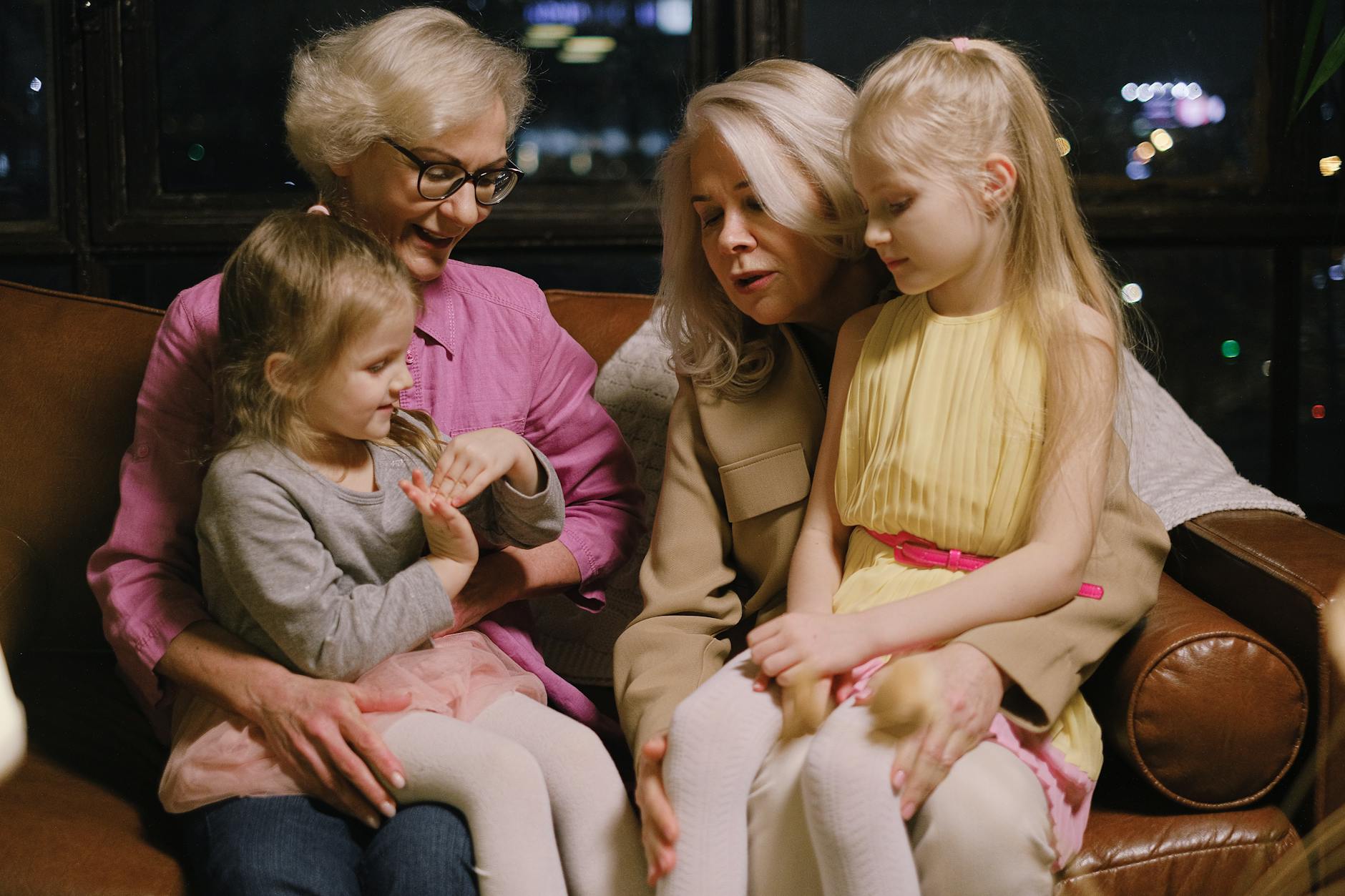
Team Grandkids: Saturday: soccer game in the suburbs. You bring orange slices. A seven-year-old named Harper tells you your hair looks like a princess. You will think about this compliment for the rest of your natural life.
Social isolation is genuinely one of the leading predictors of poor health outcomes in Americans over sixty. The Harvard Study of Adult Development — the longest-running study on human happiness in history — found that close relationships, more than money or fame, keep people happy and healthy as they age. Cats are warm. Cats are soft. Cats are, unfortunately, not a substitute for human connection, no matter how many sweaters you knit them.
Winner: Grandkids. Harper's compliment alone carries this round.
Round 4: The Unconditional Love Question
Here is where cat people get loud, so let's be fair.
Cats do love their owners. Science says so. Cats also love whoever opens the can. The distinction is subtle but worth noting.
Grandchildren, on the other hand, love you with a ferocity that is frankly alarming. They love you when you're tired. They love you when you're grumpy. They love you when you accidentally call them the wrong name because you have twelve of them and the names all start blurring together around grandchild number seven. They will stand at your graveside someday and cry real tears, and someone will say you were the kind of grandmother who always had butterscotch candies in her purse, and that will be true, and it will matter.
Mr. Whiskersworth will eat your face if you die alone in the house. This is a documented phenomenon. I did not make it up.
Winner: I think you know.
Round 5: The Legacy Problem
At sixty, most people start thinking — quietly, in the car, when a song comes on — about what they're leaving behind. Not in a morbid way. In a what was the point of all this way.
Twelve cats leave behind twelve cats, who will be redistributed to shelters or reluctant neighbors. Twelve grandchildren leave behind twelve people who carry your eyes, your stubbornness, your grandmother's pierogi recipe, and the particular way you laughed too loud at your own jokes. They carry you forward into a world you'll never see.
No promotion, no corner office, no performance review marked "exceeds expectations" has ever done that.
The Final Entry (The One That Lands)
Here is the thing this analysis won't pretend to ignore: some women didn't choose the cats. Life chose for them — circumstances, timing, health, heartbreak, partners who never showed up. This column isn't for them, and they know the difference.
But for everyone who was handed a genuine choice and told by a culture drunk on "having it all" that the cats were just as good, that the career was the real legacy, that the biological clock was a patriarchal myth invented to keep women small — the ledger is open now. The numbers are in.
The choices you made at thirty found you at sixty. The question worth sitting with — maybe with a glass of wine, maybe with a cat on your lap, maybe in the particular quiet of a house that never got loud enough — isn't whether you won or lost. It's whether the choice was actually yours.
Because if it was? Own it. Every litter box, every vet bill, every 3 a.m. yowl.
And if it wasn't?
Well. That's a different kind of accounting entirely.
Linda Kowalczyk writes about the choices that compound, the ones that don't, and the cats who judge us either way. Find more at adozencatsorgrandkids.com.