The Secret Society Operating in Plain Sight
There's a social infrastructure humming beneath American life that operates with the efficiency of a Fortune 500 company and the exclusivity of Augusta National. It's powered by women in their sixties and seventies, runs on shared grandchild stories, and has absolutely no interest in your corner office credentials.
 Photo: Augusta National, via golf.com
Welcome to the Grandmother Network — the most powerful social organization you never knew existed, and the one club where your MBA means precisely nothing.
At 62, Sarah Chen thought she'd figured out retirement socializing. She'd joined the country club, signed up for wine tastings, even tried that hiking group for "active seniors." But everywhere she went, she kept running into the same invisible wall: conversations that started with work accomplishments but somehow always circled back to grandchildren's soccer games, school plays, and family vacations.
 Photo: Sarah Chen, via images.prestigeonline.com
"I felt like I was watching a secret handshake I'd never learned," Sarah recalls. "These women would light up talking about their grandkids in a way they never did discussing their own careers. And suddenly I realized — I was the outsider."
The Economics of Emotional Labor
What Sarah stumbled into wasn't just small talk — it was the discovery of how American women actually build lasting social connections after 60. While she'd spent three decades networking professionally, other women were quietly constructing something far more durable: relationships cemented by shared investment in the next generation.
The grandmother social network operates on a currency that can't be earned through achievement. It's built on school pickup schedules, birthday party planning, and the endless coordination required to raise children who aren't technically yours but somehow become your primary social organizing principle.
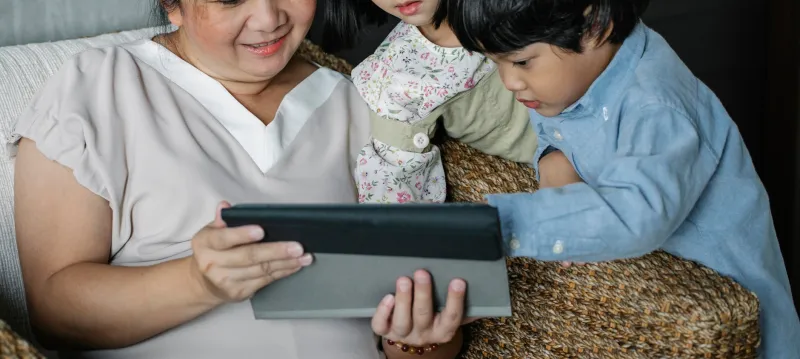
Consider the typical week of Linda Martinez, 67, grandmother of four: Tuesday morning storytime at the library (where she's befriended six other grandmothers), Wednesday afternoon soccer practice (carpooling with three families), Friday evening school fundraiser committee meeting, and Saturday's birthday party for her grandson's friend (where she'll deepen friendships with parents and other grandparents).
Now contrast that with Sarah's week: yoga class (where conversation stays surface-level), book club (which disbanded when half the members moved to be closer to grandchildren), and dinner with her neighbor (who cancels when grandkid babysitting duties call).
The Intergenerational Advantage
Here's what the career-first generation didn't anticipate: grandmotherhood doesn't just provide cute Instagram content. It creates what sociologists call "intergenerational social capital" — relationships that span age groups and create multiple points of connection within communities.
When you're invited to a grandchild's graduation, you're not just attending a ceremony. You're entering a social ecosystem that includes the child's friends' families, teachers, coaches, and extended networks. You become part of a web that extends far beyond your peer group.
"My calendar used to be full of professional networking events," says Janet Wilson, 64, a retired marketing executive. "Now I watch my sister's social life revolve around her grandkids' activities, and I realize she's building relationships with people from 25 to 85. I'm mainly talking to other childless women my age, and we're all asking the same question: 'Now what?'"
The Holiday Hierarchy
Nowhere is the grandmother social advantage more apparent than during holidays. While childless women negotiate awkward family dynamics or create chosen family traditions, grandmothers become the gravitational center of multi-generational celebrations.
They're not just attending holiday gatherings — they're hosting them, planning them, and becoming the family memory-keepers that everyone else orbits around. This role creates social obligations that ensure regular contact, meaningful relationships, and a clear sense of purpose that extends far beyond personal fulfillment.
"I used to think my sister was crazy, always fussing over holiday traditions and family photos," admits Carol Thompson, 61. "But now I see that she was building something I can't replicate. She's the center of this whole family universe, and everyone needs her. My cats are very independent."
The Friendship Infrastructure
Perhaps most painfully, the grandmother network reveals how American women actually maintain friendships after career obligations fade. It's not through shared interests or professional connections — it's through shared investment in children's lives.
Moms who met at preschool pickup become grandmothers who coordinate family vacations together. The women who organized school fundraisers become the ones planning 60th birthday parties for each other. The infrastructure built around children's needs becomes the foundation for lifelong friendships that survive career changes, relocations, and life transitions.
"I always thought mom friends were just circumstantial," reflects Maria Santos, 59. "I was wrong. Those women built something real while I was building my 401k. Now they have each other, and I have my financial advisor."
The RSVP Reality
At 65, the social calculus becomes stark. Invitations flow toward women who bring grandchildren to gatherings, who can contribute family stories to conversations, and who understand the shared language of child-rearing concerns that never really end.
The women who chose career advancement over family expansion find themselves fluent in professional accomplishments but unable to participate in the conversational currency that actually powers long-term female friendships in America.
It's not that these women are deliberately excluded — it's that they're operating in a different social economy entirely. And by the time they realize the exchange rate, it's too late to invest in the relationships that compound over decades.
The Compound Interest of Connection
The cruel irony is that the women who understood compound interest in their investment portfolios missed it in their social ones. While they were accumulating professional achievements, other women were making deposits into relationship accounts that would pay dividends for decades.
Now, at 65, watching their peers navigate rich social networks built around grandchildren, they're learning a lesson that no business school teaches: some kinds of wealth can't be earned — they can only be inherited or created through the patient work of loving people who will love other people long after you're gone.
The grandmother network isn't just about grandchildren. It's about understanding that the most valuable social currency in later life isn't what you accomplished — it's who you raised to accomplish things after you're gone.