No One to Call: The Quiet Crisis Hitting Childless Women as Retirement Arrives
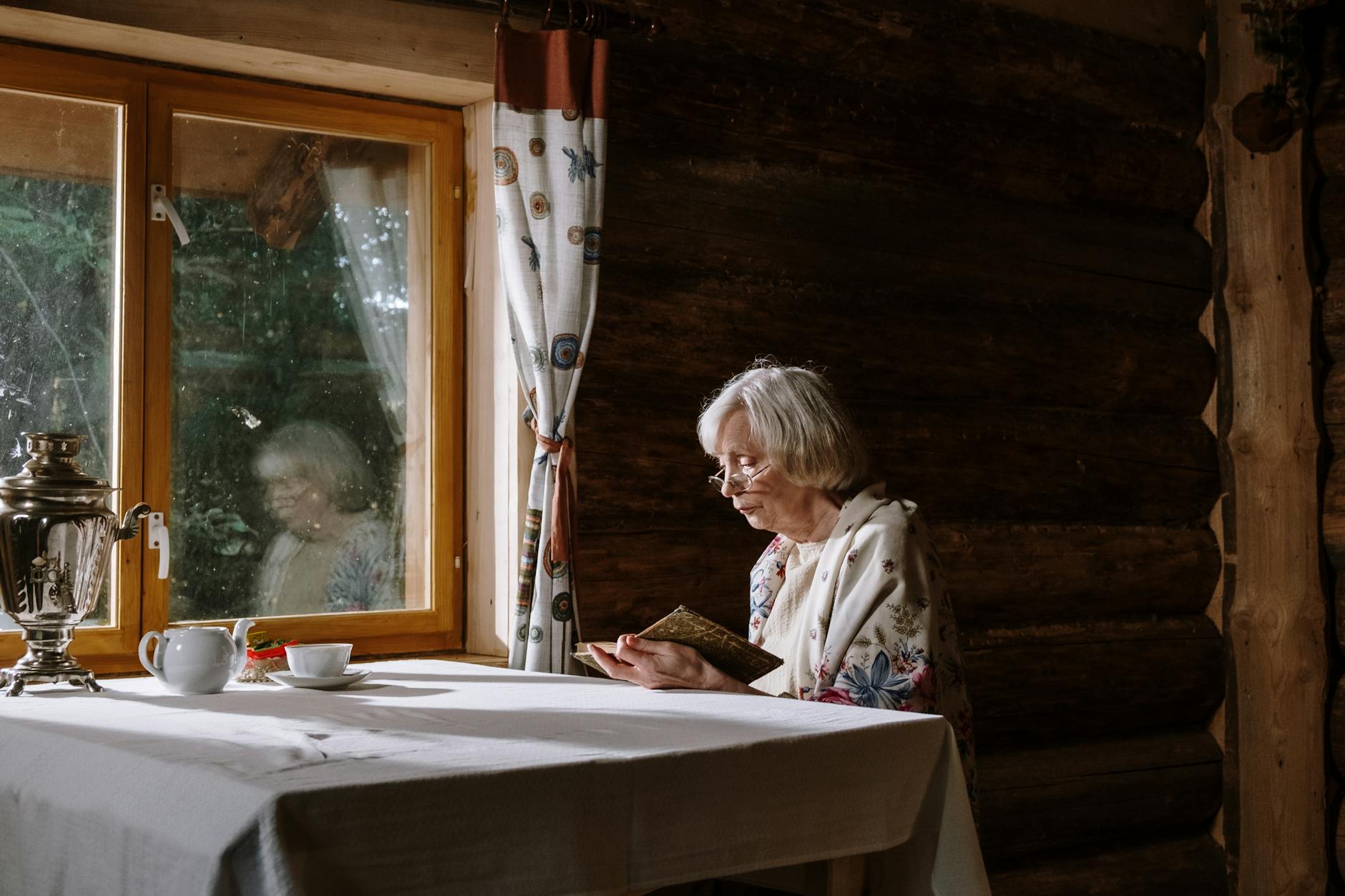
No One to Call: The Quiet Crisis Hitting Childless Women as Retirement Arrives
There's a conversation happening in America right now — in retirement communities, in elder care facilities, in the offices of financial planners and geriatric social workers — that almost nobody in mainstream media wants to touch with a ten-foot pole.
It goes something like this: a significant and growing cohort of women, now in their late fifties and early sixties, is approaching the final third of life without children, without grandchildren, and frequently without the kind of close, durable family network that has historically served as both emotional infrastructure and practical safety net. They are educated. They are often financially comfortable. And a striking number of them are profoundly, quietly alone.
This is not a story about failure. It's a story about a missing conversation — one that was deliberately omitted from the empowerment messaging of the 2000s and 2010s, and whose absence is now showing up in the data in ways that are difficult to ignore.
The Numbers Don't Editorialize
Let's start with the census. According to U.S. Census Bureau data, approximately 20% of American women now reach the end of their childbearing years without having had children — double the rate of the 1970s. Among college-educated women, that figure runs higher. Among women who spent their prime earning years in professional careers in major metropolitan areas, higher still.
Simultaneously, the U.S. Surgeon General's 2023 advisory on the loneliness epidemic identified social isolation as a public health crisis comparable in mortality risk to smoking fifteen cigarettes a day. The populations most affected? Older adults. Specifically, older adults without close family ties.
The National Academies of Sciences, Engineering, and Medicine found that more than one-third of adults aged 45 and older report feeling lonely, and that social isolation among older Americans is associated with a 50% increased risk of dementia, a 29% increased risk of heart disease, and a 32% increased risk of stroke.
None of these statistics are partisan. They don't have an agenda. They're just the actuarial reality of what human beings need in order to thrive — and what happens when those needs go unmet.
What the Messaging Left Out
To understand how we got here, you have to go back to the cultural moment that shaped the choices of the women now approaching retirement age. Gen X women — born roughly between 1965 and 1980 — came of age in an era of aggressively optimistic feminist messaging. The glass ceiling was the enemy. The boardroom was the destination. Children, if mentioned at all, were framed as a personal choice with no particular long-term implications either way.
"Have it all" was the slogan, though the fine print was rarely discussed. You could have the career and the family, theoretically — but the career was positioned as the serious ambition, and the family as the sentimental add-on that you'd figure out eventually. Fertility, it turned out, had opinions about "eventually" that no one was being particularly straightforward about.
Meanwhile, the messaging that accelerated through the 2010s — the lean-in era, the girl-boss era, the era of think pieces explaining that choosing not to have children was not just valid but possibly superior — explicitly framed motherhood as a patriarchal construct that enlightened women were right to interrogate. The woman who skipped kids for a career wasn't making a trade-off. She was evolving.
What the messaging consistently omitted was the long-term math on connection. On who shows up. On what legacy means when it isn't biological. On the specific texture of a life in its final decades when there are no children to call, no grandchildren to visit, no one who will carry your particular version of the world forward after you're gone.
The Women on Both Sides
Diana, 63, lives outside of Denver. She spent thirty years in pharmaceutical sales, traveled extensively, and made a deliberate decision at 34 not to have children. She describes her life as genuinely good — she has close friends, a condo she loves, and a rescue cat named Ptolemy who she talks about with the specificity most people reserve for family members.
She also describes something harder to name. "There's a moment," she says, "usually on a Sunday evening, where I feel the weight of it. Not regret exactly. More like... awareness. Like I can see the shape of what isn't there."
Contrast that with Renee, 59, who lives in suburban Ohio with her husband of thirty-one years. She left a promising marketing career at 38 to raise three children. She describes the sacrifice as real and the reward as equally real. Her eldest daughter lives twenty minutes away. Her son calls every Sunday. She has two grandchildren, with a third on the way. "I won't pretend it was all easy," she says. "But I will tell you that I have never once wondered who's going to be there."
Neither of these women is the villain of the other's story. But the contrast between them — the specific, practical difference in what their sixties look like — is exactly the conversation that the culture was too invested in avoiding.
The Elder Care Reckoning
There is a practical dimension to this that transcends sentiment entirely. The United States is facing a structural elder care crisis, and childless older adults are disproportionately exposed to its worst consequences.
The AARP estimates that approximately 53 million Americans currently serve as unpaid caregivers — and the vast majority of those caregivers are adult children. For older adults without children, the alternatives are expensive (private care can run $6,000 to $10,000 per month for memory care facilities), inconsistent, and frequently inadequate.
Social workers who specialize in elder care have a term for older adults with no family network to coordinate their care: "elder orphans." It's an unglamorous phrase, and it describes a population that is growing faster than the systems designed to support it.
"I see it constantly," says one geriatric care manager based in Chicago, who asked not to be named. "Women who were enormously successful, who planned everything — their finances, their retirement, their health — but who didn't plan for the human piece. For who makes decisions when you can't. For who visits. For who cares."
The Conversation We Weren't Allowed to Have
The thesis of this website is not that women who chose careers over children made a mistake. It's more uncomfortable than that. It's that they were never given the full information to make the choice clearly — that the cultural conversation of the past thirty years was systematically incomplete in ways that are now becoming visible in the demographics of American loneliness.
A woman at 32 deserves to know that fertility declines faster than ambition. She deserves to know what the Harvard happiness study actually found. She deserves to know what "elder orphan" means and why it's a growing category. She deserves to know that the work family disperses, that the wine culture has a dark side, that the cats — wonderful as they are — cannot replicate the specific texture of being known by someone who shares your blood and your history.
She may still make the same choice. That's her right. But she should make it with the lights on.
The grandkid gap is real. The loneliness data is real. The elder care crisis is real. And the women staring down retirement with thirteen cats and a LinkedIn profile and a Sunday evening silence they can't quite name — they're real too.
They deserved a more honest conversation in their thirties. The least we can do is have it now.