One Line for Emergency Contacts: What Happens When You Reach 75 and the Village Was Never Built
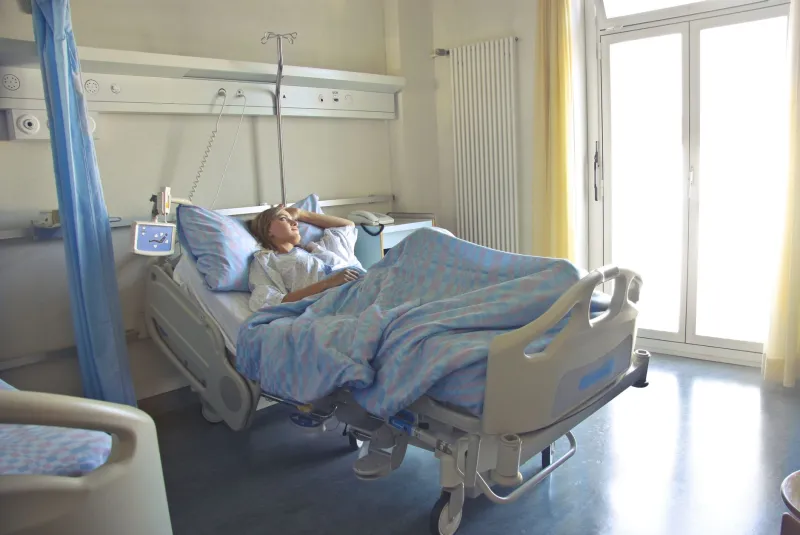
The form is two pages long. It asks about insurance, about medications, about allergies, about dietary preferences. It asks whether you prefer a room with a window. It asks, near the bottom of page one, for your emergency contact.
One line. The form assumes one line is enough. The form was designed by people who assumed the answer would be obvious — a daughter, a son, a spouse of four decades. Someone who will answer on the second ring. Someone who already knows your medication list because they've been paying attention.
For a significant and growing segment of American women, that line is where the paperwork stops feeling routine.
The Institutional Architecture of Family
America's eldercare system was not designed for people without families. This is not a conspiracy. It is simply the artifact of a system built during an era when the multigenerational household was the default and the childless woman in her seventies was the statistical exception rather than a demographic cohort large enough to require its own policy framework.
The assumption of family runs through every layer of the system. Hospital discharge planners ask who will be taking you home. Home health agencies ask who will be supervising your care. Assisted living facilities ask who holds your healthcare proxy. Nursing home social workers ask who they should call. The entire infrastructure presupposes a person — ideally several persons — who are invested in your wellbeing in a way that is non-transactional, non-billable, and available at 3 a.m.
When that person doesn't exist, the system doesn't break. It just becomes significantly more expensive, significantly more complicated, and significantly more dependent on your own cognitive capacity at precisely the moment when cognitive capacity may be the thing in question.
The Advocacy Gap
Let's talk about what actually happens when you're hospitalized without a family member present, because it is illuminating in ways that a career in corporate strategy did not prepare you for.
Hospitals are busy. Hospital staff are well-intentioned and overextended. Decisions get made quickly, often at hours when you are medicated, disoriented, or simply exhausted enough to agree to things you would not agree to at full capacity. The family member — the daughter who shows up with a legal pad and questions, the son who asks the surgeon to slow down and explain — is doing something that has a formal name in healthcare: patient advocacy. It is, in the absence of a professional patient advocate, almost always performed by family.
Professional patient advocates exist. They charge between $100 and $400 per hour. They are excellent. They are not your child, which means they are not free, not automatically present, and not emotionally invested in the outcome in the way that changes how hard someone fights for you.
The woman down the hall has three children taking shifts. Someone is always there. Someone is always asking questions. You have a very good friend named Patricia who will absolutely come when she can, but Patricia also has her own health concerns, her own family, and her own life that does not pause because yours has become a crisis.
The Legal Architecture Nobody Built at Forty
The documents you need — and make no mistake, you need them — are a healthcare proxy, a durable power of attorney, a living will, and ideally a POLST form (Physician Orders for Life-Sustaining Treatment) once you're in the relevant age range. These documents designate who makes decisions when you cannot. They are the paper version of the family you didn't build.
The trouble is that designating someone requires having someone to designate. A healthcare proxy must be a person willing to make difficult medical decisions on your behalf, available to be reached in an emergency, and legally authorized to act. Most people choose a spouse or adult child. You are choosing from a different pool: a close friend, a sibling, a niece or nephew, a neighbor you trust.
Friends and siblings age alongside you, which means your designated proxy may face their own health crises at the moment yours arrives. Nieces and nephews have their own families, their own obligations, their own geography. The person you designated at fifty-five may be less available, less healthy, or less local by seventy-five. The documents need revisiting. Most people do not revisit them.
There is also the question of what happens when no one steps forward voluntarily. In that case, the state appoints a guardian. A stranger, assigned by a court, makes decisions about your medical care, your finances, and your living situation. This is not a hypothetical. It happens regularly. It happens to people who were competent and organized and simply ran out of personal network at the wrong moment.
The Geriatric Care Manager You Didn't Know You'd Need
The professional role that quietly substitutes for adult children in elder care is called a geriatric care manager, sometimes a senior care advisor. They assess your needs, coordinate your care, communicate with medical providers, manage facility transitions, and handle the ten thousand logistical details that would otherwise fall to a family member.
They are invaluable. They charge $80 to $200 per hour. The adult children performing equivalent services charge nothing, because love is not billable.
This is not an argument against hiring a geriatric care manager. It is an argument for understanding, clearly and without sentiment, that every function a family performs for free carries a market price — and that the market price, compounded across a long decline, is substantial.
The Conversation Worth Having Now
The women who navigate this well — and some do; it is possible; it requires planning of a specificity that most people find uncomfortable — start early. They identify their people and have explicit conversations about what they're asking. They create legal documents and update them regularly. They build relationships with elder law attorneys, financial advisors who specialize in long-term care, and yes, professional geriatric care managers who know their situation before the crisis arrives.
They also, in many cases, move. Proximity to a trusted person matters more than most people calculate when they're fifty and healthy and the question feels abstract. The friend in Phoenix is a wonderful friend. She is not a wonderful emergency contact if you live in Vermont.
The cats, bless them, will be with you for part of this journey. They will sit on the legal documents while you try to read them. They will knock the pen off the table twice before you finish signing. They will be, in their way, present.
But they cannot sign as witnesses. That line, too, requires a human being.
Fill it in while you still have good options.