When 'Downsizing' Means Something Different
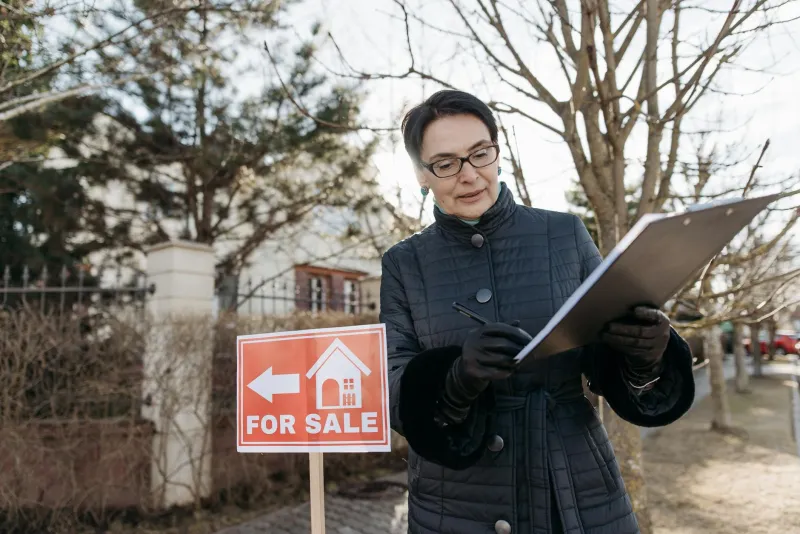
The realtor's smile faltered for just a moment when I told her I wasn't moving to be closer to family. Not because I was estranged from relatives, not because of some dramatic falling out, but because the family I'd be moving closer to consists of three cats who are perfectly content with our current ZIP code.
"Oh," she said, recovering quickly with professional grace. "Well, we have some lovely active adult communities..."
And there it was — the awkward dance that happens when the entire real estate industry's playbook assumes you're either moving to be near grandchildren or finding a place where someone can eventually check on you. What they don't have is a category for women who chose boardrooms over baby rooms and are now facing the peculiar challenge of aging without a built-in support system.
The Geography of Growing Old
Every real estate conversation after fifty comes with an unspoken assumption: you're planning your exit strategy around proximity to people who share your DNA. The marketing materials are full of phrases like "close to family," "grandparent-friendly layouts," and "multi-generational living options."
But what happens when your emergency contact list reads like a professional networking event rather than a family tree? When the people most invested in your wellbeing live in different time zones and have their own retirement planning to worry about?
At sixty-two, I've discovered that the American housing market has an entire vocabulary for people who are downsizing to be near grandchildren, but they're surprisingly quiet about options for women whose closest relationships involve automatic feeders and veterinary bills.
The Questions Nobody Prepared You For
"So, where are your kids located?" the realtor asked, pulling up listings on her tablet. It's an innocent question, really. Most people her age are juggling retirement dreams with the reality of wanting to be within driving distance of grandchildren's soccer games.
"I don't have children," I explained, watching her mental GPS recalculate in real time.
"Oh! Well, that gives you so much more flexibility!" she said, with the forced enthusiasm of someone who'd just realized her standard script needed rewriting.
Flexibility. That's the word they use when they don't know what else to say. You have the flexibility to live anywhere, which sounds liberating until you realize it also means you have no gravitational pull drawing you toward any particular place. No grandchildren's bedrooms to consider, no adult children's commutes to factor in, no family traditions rooted in specific locations.
Just you, your cats, and the overwhelming freedom to choose from literally anywhere in America.
The Active Adult Community Shuffle
The retirement community tour is a special kind of torture when you're single and childless. Every amenity is designed around the assumption that you'll have regular visitors who might want to use the guest suite or enjoy the family-friendly pool area.
"This is our beautiful clubhouse where residents host birthday parties for their grandchildren," the sales agent chirped, gesturing toward a space clearly designed for celebrations I'd never throw.
"And here's our visitor parking — very convenient when the kids come to visit for the holidays."
"Our fitness center is popular with grandparents who want to keep up with the little ones."
I started mentally replacing every reference to grandchildren with "cats" just to stay engaged. "This clubhouse is where I'd host birthday parties for Mr. Whiskers. The visitor parking is convenient for the vet. The fitness center is popular with people who need to stay agile enough to clean litter boxes."
It helped, but only marginally.
The Unspoken Economics of Aging Alone
Here's what the glossy retirement brochures don't tell you: aging without family nearby is expensive. Not just financially, though that's certainly part of it, but expensive in terms of the social and emotional labor you have to outsource.
Families provide built-in check-in systems. Adult children notice when Mom seems a little more forgetful, when Dad's driving isn't quite what it used to be, when the house maintenance is starting to slip. They provide early warning systems for problems and informal support networks for solutions.
When you don't have that built-in system, you have to create it artificially. Concierge services, home health aides, professional organizers, house cleaners, grocery delivery, medication management systems — all the things that families often provide for free become line items in your budget.
The active adult communities know this, which is why they're increasingly marketing themselves as "full-service lifestyle solutions." They're selling you the infrastructure that other people get from their families.
The Friendship Gamble
The alternative to family proximity is friendship proximity — moving somewhere because you've built meaningful relationships with people who've chosen to care about your wellbeing. This is actually a beautiful thing when it works, but it's also a gamble.
Friendships, no matter how deep, don't come with the same obligations as family relationships. Friends can move away, develop their own health issues, or simply drift apart over time. The woman who promises to check on you daily might find herself overwhelmed by her own aging parents or grandchildren who need attention.
I'm not saying friendships are less valuable than family relationships — sometimes they're more valuable. But they're also more fragile, more dependent on mutual capacity and continued compatibility.
When you're sixty-five and choosing where to spend what might be your last decades, betting everything on friendships requires a certain leap of faith that not everyone is comfortable making.
The Rise of Intentional Aging
The real estate industry is slowly waking up to the reality that a growing number of Americans are aging without traditional family support systems. The response has been a boom in "intentional communities" designed specifically for people who want to age among chosen family rather than biological family.
These aren't your grandmother's retirement homes. They're co-housing developments, LGBTQ-friendly communities, artist colonies, and eco-villages where residents explicitly commit to looking out for each other as they age. The idea is to create the social infrastructure that families used to provide, but with people who've consciously chosen to be there.
It's an interesting experiment, but it's also expensive and requires a level of social confidence that not everyone possesses. Plus, there's still the question of what happens when the people you've chosen to age with start developing their own limitations.
The Cats Don't Care About the ZIP Code
In the end, I bought a small house in a college town where the neighbors are a mix of retirees, young families, and professors. It's not perfect, but it has good walkability, decent healthcare, and a surprisingly vibrant community of people who've ended up there for various reasons rather than family obligations.
The cats adjusted to the move with their characteristic indifference to human real estate decisions. They've established new favorite napping spots and seem unbothered by the fact that our closest relatives are now three states away instead of one.
Sometimes I wonder what it would be like to have made different choices, to be house-hunting near grandchildren's schools instead of veterinary clinics. But mostly, I'm grateful for the flexibility that the realtor mentioned, even if it came with a side of existential loneliness.
The house has good light, low maintenance requirements, and enough space for three cats to live comfortably. At sixty-two, that feels like enough.