The Invisible Handshake You Never Learned
There's a parallel economy running alongside the regular one, and chances are you've never been invited to join. It doesn't operate on LinkedIn endorsements or Yelp reviews. Instead, it runs on something far more exclusive: the shared experience of having raised children who now have children of their own.
Welcome to the Grandparent Network, America's most exclusive club that nobody talks about — probably because they're too busy trading favors to notice you're standing on the outside looking in.
How the Real Referral System Actually Works
While you were perfecting your elevator pitch and building professional networks, another kind of social capital was accumulating in places you never thought to look. The playground. The school pickup line. Youth soccer games on Saturday mornings.
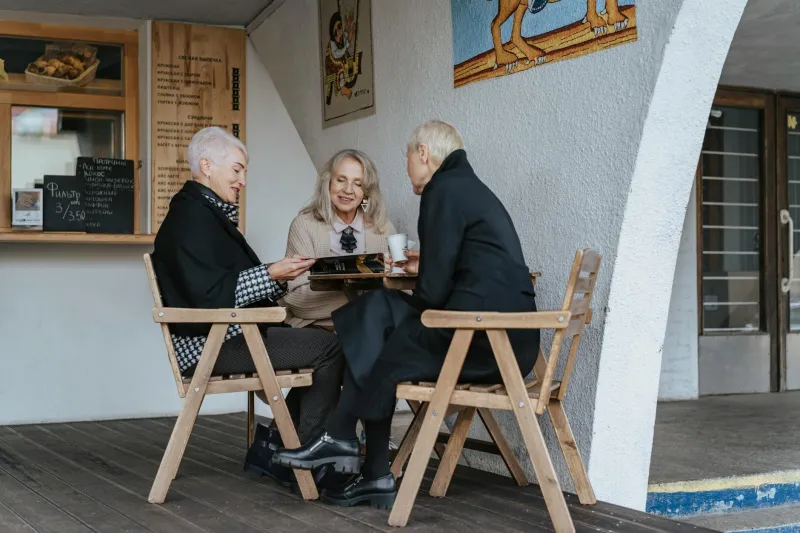
It starts innocently enough. Two grandmothers strike up a conversation while their grandkids play. One mentions she needs a reliable handyman. The other has the perfect guy — her daughter's neighbor who fixed their deck last summer, completely trustworthy, doesn't overcharge. Numbers are exchanged. A relationship is born.
Multiply this interaction across thousands of parks, hundreds of school events, and countless family gatherings, and you've got yourself an informal economy that rivals anything Wall Street ever dreamed up. Except the entry fee wasn't an MBA — it was a baby, born thirty years ago.
 Photo: Wall Street, via c8.alamy.com
The Trust Factor Money Can't Buy
Here's what makes this network so powerful: it's built on something no amount of professional achievement can replicate. When a grandmother recommends her pediatrician to another grandmother, she's not just sharing information. She's saying, "I trust this person with the most precious thing in my world, and I'm willing to stake my reputation as a grandmother on it."
That level of trust doesn't exist in professional networks. Your LinkedIn connections might endorse your project management skills, but would they trust you with their grandchild's health? The answer, for most of us, is probably not.
What You're Missing (Besides the Obvious)
The services traded in this network aren't just any services — they're the good ones. The contractor who shows up on time and doesn't disappear halfway through the job. The doctor who actually listens and doesn't rush you out after five minutes. The financial advisor who won't try to sell your retirement fund on cryptocurrency.
These professionals often don't advertise because they don't need to. Their calendars stay full through word-of-mouth recommendations from a network that operates on multi-generational trust. They're the best-kept secrets in America, and the secret is kept by grandparents.
The Geography of Exclusion
This network doesn't just exclude you from services — it excludes you from entire communities. In many suburban areas, the informal grandparent economy shapes everything from neighborhood safety (who's watching whose house) to local politics (whose kids are running for school board with grandparent campaign volunteers).
Move to a new city at 62? Good luck breaking into social circles that formed around car pools and soccer snacks twenty years ago. Your impressive resume might get you into the country club, but it won't get you into the coffee chat where someone mentions they know a great estate planning attorney.
The Digital Divide You Didn't See Coming
Even technology works against you here. The grandparent networks have gone digital, but not in the ways you might expect. They're not on professional platforms — they're in private Facebook groups with names like "Oakwood Elementary Grandparents" or "Soccer Grandmas Supporting Our Stars."
 Photo: Oakwood Elementary, via images.squarespace-cdn.com
These groups share everything from babysitter recommendations to warnings about unreliable contractors. They coordinate carpools for grandkids and organize group discounts for everything from lawn care to home security systems. It's social media's most powerful application, and you're not invited.
When Professional Networks Fall Short
Sure, you've got professional contacts. You probably know lawyers, doctors, and financial advisors through work connections. But here's the thing about professional referrals: they're often based on business relationships, not personal trust.
The doctor your former colleague recommended might be technically competent, but did that colleague trust them with their grandchild's asthma? The contractor your business partner suggested might have done good work on office renovations, but would your partner trust them in their daughter's home while she's at work?
The grandparent network operates on a different level of vetting, one that goes beyond professional competence to personal character.
The Cats' Complete Indifference to Networking
Mr. Whiskers has never once offered to refer a good veterinarian, despite having extensive personal experience with several. Mittens remains stubbornly unhelpful when it comes to recommending reliable pet sitters for your occasional weekend getaways. And don't even get started on Princess Fluffington's complete failure to network with other cats whose humans might need house-sitting services.
The truth is, cats make terrible professional networkers. They're far too independent to participate in reciprocal favor economies, and they view most human problems as beneath their concern. Which is probably why, at 62, your emergency contact list is shorter than your grocery list, and your most reliable recommendation source is still Angie's List.
The Long Game You Didn't Know You Were Playing
The cruelest irony is that this network was never explicitly closed to you. Thirty years ago, you could have joined. You had the entry ticket — the career success that would have made you an attractive addition to any community of young parents. You could have been the working mom other working moms looked up to, the one with connections to recommend when someone needed a good accountant or lawyer.
But you were busy optimizing for different metrics. You were building professional capital while they were building social capital. You were climbing corporate ladders while they were building community roots. Neither choice was wrong, but only one of them comes with a built-in support network that lasts into retirement.
Now, at 60, you're discovering that the most valuable currency isn't what you earned — it's who you know, and more importantly, who knows you well enough to trust you with what matters most to them. And in America, what matters most to people is usually small, loud, and needs to be picked up from soccer practice.