The Fine Print Nobody Reads (Until It's Too Late)
Pick up any senior living brochure in America and start reading the fine print. Not the part about amenities or monthly fees — dig into the actual contract language. You'll find phrases like "family involvement in care planning," "designated family contact for emergencies," and "family consultation required for major medical decisions."
Notice a pattern? The entire American senior care industry was built on the assumption that somewhere in your life story, you produced a human being who would eventually become your advocate, decision-maker, and emergency contact. If you spent your thirties climbing corporate ladders instead of changing diapers, you're about to discover that retirement planning has some very specific demographic assumptions.
Room Design: The Subtle Architecture of Expectation
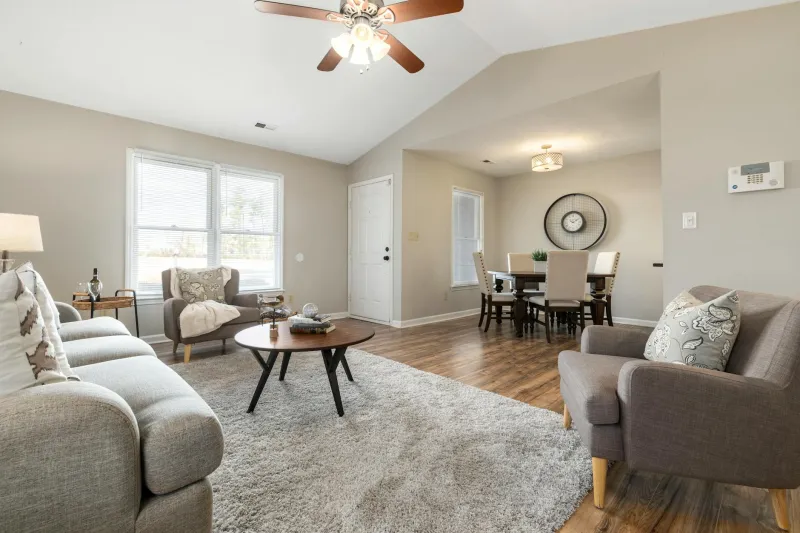
Walk through any model apartment at a continuing care retirement community. Notice how they've staged it. There's the comfortable chair positioned perfectly for conversations. The small dining table set for two. The photo frames strategically placed to suggest visiting family members. The guest bedroom that's just big enough for overnight stays from "the kids."
Even the furniture arrangement assumes you'll have regular visitors who aren't delivering your groceries. The living room setup suggests ongoing relationships that require comfortable seating for multiple people. Your current apartment, optimized for one person and several cats, doesn't translate well to this vision of golden years socializing.
The Family Meeting You Can't Call
Here's where it gets interesting. Most major decisions about your care — the transition from independent living to assisted care, memory care placement, end-of-life planning — are designed to happen in family meetings. The social worker expects to meet with your adult children. The care coordinator wants to discuss your needs with your family support system. The financial planner assumes someone younger will be managing your affairs when you can't.
Your cats are excellent listeners, but they're not legally qualified to make healthcare decisions on your behalf.
The Emergency Contact Dilemma
Every form you fill out asks for it: emergency contact information. Not just someone to call if you fall, but someone who knows your medical history, your preferences, your values, and your wishes. Someone who can make decisions that align with who you are as a person. Someone who has enough invested in your wellbeing to show up at 2 AM when the hospital calls.
You've probably listed a niece, a friend, maybe a colleague. But the system assumes your emergency contact has been practicing for this role their entire life — growing up in your house, watching your decision-making process, understanding your values through decades of shared experience.
The Visitation Room Reality
Here's something nobody mentions in the sales presentation: the social architecture of senior living facilities is built around regular visitors. The common areas are designed for intergenerational gatherings. The calendar of activities includes "Grandparents Day" and "Family Fun Night." The dining room has larger tables that accommodate multiple generations sharing meals.
When you're eating dinner alone at the table for six, the design choices become less charming and more like architectural evidence of the life path you didn't take.
The Holiday Assumption
Check out the activity calendar during the holidays. "Cookie decorating with grandchildren." "Holiday craft making for family gifts." "Special family dinner seating available." The entire programming schedule assumes you'll have somewhere to go for Thanksgiving, people to buy Christmas presents for, and family traditions that require your participation.
Your tradition of ordering Chinese takeout and binge-watching Netflix doesn't require the community center's special holiday programming.
The Care Level Transition Nobody Planned For
Here's the part they don't advertise: most transitions between care levels — independent living to assisted living to memory care — happen because a family member noticed changes and advocated for different services. Someone who sees you regularly enough to notice that you're struggling with medication management, forgetting appointments, or becoming isolated.
The system assumes someone is monitoring your wellbeing who isn't paid to do it. Someone with emotional investment in your quality of life who can spot the subtle changes that indicate you need different support.
The Advocacy Gap
When things go wrong — and they will — the system expects you to have an advocate. Someone who will question the care plan, push for better services, complain about problems, and generally make noise when your needs aren't being met. Healthcare systems respond to squeaky wheels, and the squeakiest wheels are usually adult children who inherited their parent's wellbeing as their responsibility.
Your designated emergency contact friend means well, but they're not going to wage war with the insurance company over your physical therapy coverage.
The Estate Planning Conversation
Even the financial planning assumes a certain family structure. Estate planning discussions revolve around "leaving something for the kids." Investment strategies focus on "preserving wealth for the next generation." Tax planning optimizes for "family wealth transfer."
When the financial advisor asks about your beneficiaries and you mention your cats and a few charities, the conversation takes an awkward turn that nobody's sales training prepared them for.
The Social Currency You Can't Earn
The hardest part isn't the logistics — it's the social reality. Senior living communities operate on an informal hierarchy, and grandparent status is the primary currency. The residents with regular visitors get more attention from staff. The ones with involved adult children get better advocacy when problems arise. The grandparents get invited to more social activities because their stories are more relatable to other residents.
You can't earn your way into this social structure at seventy. It was built through decades of investment you didn't make.
The Brochure They Should Have Written
Somewhere, there should be a senior living brochure designed for women who chose careers over children. It would advertise single-occupancy units with home offices that convert to cat rooms. It would feature activity calendars focused on book clubs and documentary screenings instead of grandparent gatherings. It would staff social workers trained in supporting residents who don't have family advocates.
That brochure doesn't exist because the market wasn't big enough to design around — until now. Turns out, a whole generation of women made similar choices, and they're all approaching retirement age with the same realization: the system wasn't built for them.
The cats are lovely companions, but they're not qualified to review your care plan or argue with Medicare on your behalf. The corner office was a great achievement, but it doesn't translate to better treatment in assisted living facilities.
You optimized for independence, and now you're discovering that the final chapters of life were written assuming you'd have built dependencies along the way.