The Ultimate Flex That Nobody Wants
There was a time when I wore my scheduling freedom like a designer handbag. "Book club on Wednesday? Absolutely!" "Impromptu weekend in Napa? I'm in!" "Last-minute concert tickets? You know I'm available!" I was the friend who never had to check with anyone, never needed a babysitter, never had to coordinate carpools or school events. I was available, and I thought that made me invaluable.
Funny how the tables turn.
The Slow Fade of Social Currency
Somewhere in my late forties, the invitations started getting... different. Book club moved to Thursday nights because "most of us need to coordinate with our kids' schedules." The weekend trips became family affairs. The impromptu dinners turned into carefully orchestrated playdates where the kids could run around while the adults caught up.
I told myself it didn't matter. I had freedom. While Sarah was shuttling between soccer practice and piano lessons, I was taking pottery classes and learning French. While Jennifer was meal-prepping for a family of five, I was trying that new tapas place downtown. I was living my best life, right?
The Arithmetic of Friendship
Here's what they don't tell you about being the perpetually available friend: eventually, people stop calculating you into their social equations. It's not malicious—it's mathematical. When you're planning a dinner party for couples with kids, you think about childcare, bedtimes, school nights. You think about who can relate to your stories about potty training disasters and college fund stress. You don't think about the woman who'll show up with expensive wine and no understanding of why everyone needs to leave by 9 PM.
The Freedom Nobody Warned You About
By fifty-five, my calendar looked like a minimalist's dream. Clean. Spacious. Optimized for spontaneity. The problem was, spontaneity requires other people to be spontaneous with. My friends were deep in the thick of family logistics—elderly parents, teenage drama, grandparent duties. Their spontaneity had been replaced by strategic planning that looked six months out.
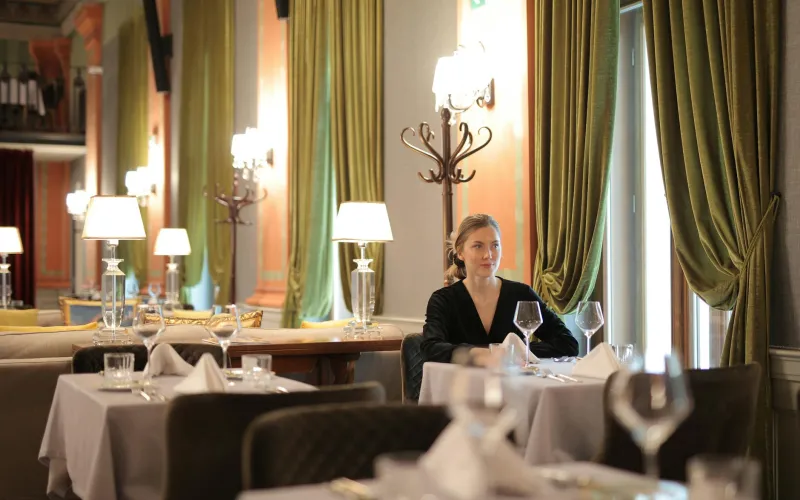
Meanwhile, I was sitting in my pristine apartment, surrounded by the fruits of my freedom: art from travels they couldn't take, books I had time to read, a wine collection that aged beautifully while I... also aged. Alone.
The Dinner Party Math
Here's the brutal truth about dinner parties in your sixties: they're family math problems. Eight people around the table means four couples, or three couples plus the widowed friend who brings stories about her grandchildren. There's no comfortable equation for the single woman whose biggest relationship is with her Maine Coon, Mr. Fitzgerald.
I've become the afterthought invite—the "oh, should we ask Linda too?" addition that makes the table odd-numbered and the conversation slightly awkward. They love me, but I don't fit the pattern anymore. I'm the extra puzzle piece from a different box.
The Holidays That Reorganize Themselves
Christmas morning used to be about sleeping in and mimosa brunches. Now it's about watching my friends' Instagram stories of grandchildren opening presents while I'm explaining to Mr. Fitzgerald why there are ribbons under the tree but no small humans to appreciate them.
Thanksgiving has become a series of polite invitations from friends who feel sorry for me, where I sit at tables full of people discussing school districts and college applications while I contribute stories about my latest Netflix binge. I'm grateful for the invitations, but I'm also acutely aware that I'm the charity case at someone else's family gathering.
The Question Nobody Asks
The question that haunts my 3 AM conversations with the cats is this: was the freedom worth it? Not in some grand, philosophical sense, but in the small, daily arithmetic of human connection. Was the ability to take that job in Singapore worth the empty dining room table? Was the freedom to travel worth coming home to an apartment where the only voice that greets you purrs?
I'm not saying I made the wrong choice. I'm saying nobody told me it was a choice with compound interest that would come due in my sixties.
The Math They Never Showed Us
The career counselors and feminist mentors who cheered us on never showed us this part of the equation. They talked about glass ceilings and equal pay and having it all. They never mentioned that "having it all" might eventually mean having it all to yourself.
They never calculated the social mathematics of a life optimized for individual achievement in a world that increasingly organizes itself around family units. They never factored in the loneliness that comes with radical availability in a world where everyone else has become strategically unavailable.
The Company I Keep Now
These days, my social calendar is populated by other women like me—successful, independent, and increasingly reliant on each other for the human connection that used to come naturally through the chaotic, messy networks of family life. We meet for lunch and talk about our careers, our travels, our cats. We don't talk about the empty Sunday afternoons or the holidays that feel like someone else's celebration.
Mr. Fitzgerald is excellent company, but he doesn't laugh at my jokes or remember my stories or ask about my day with genuine interest. He purrs, and sometimes that's enough. But sometimes it's not.
The Freedom Audit
So here I am at sixty-two, conducting an audit of my freedom. The profit column is impressive: career success, financial independence, passport full of stamps, apartment decorated exactly to my taste. The loss column is quieter but persistent: Sunday dinners alone, holidays as a spectator, a social life that requires increasingly more effort to maintain.
Was it worth it? Ask me again when Mr. Fitzgerald learns to make reservations.