When the Applause Stops Forever: The Funeral Home Reality Check No Corner Office Prepared You For
The Meeting Nobody Schedules
The funeral director's clipboard has seen it all, but even he pauses when reviewing your intake form. Emergency contact: your sister in Phoenix (who you talk to twice a year). Next of kin: same sister. People to notify: your assistant, your financial advisor, and... that's where the pen stops moving.
Thirty years of networking events, conference presentations, and industry leadership, and the "people to contact" list fits on three lines. The funeral director has handled CEOs before, but usually their children are fighting over the guest list, not struggling to fill the first row.
This is the conversation no career counselor ever prepared you for: what happens when a lifetime of professional achievement meets the ultimate personal reckoning, and there's no PowerPoint presentation that can solve the problem of who actually shows up to remember you.
The Guest List That Writes Itself (Or Doesn't)
Mrs. Patterson from down the street had 200 people at her service last month. Her children flew in from three states, her grandchildren served as pallbearers, and the church overflow room was packed with neighbors, former students, and bridge club members who'd known her for decades. The funeral lasted three hours because everyone had a story to tell.
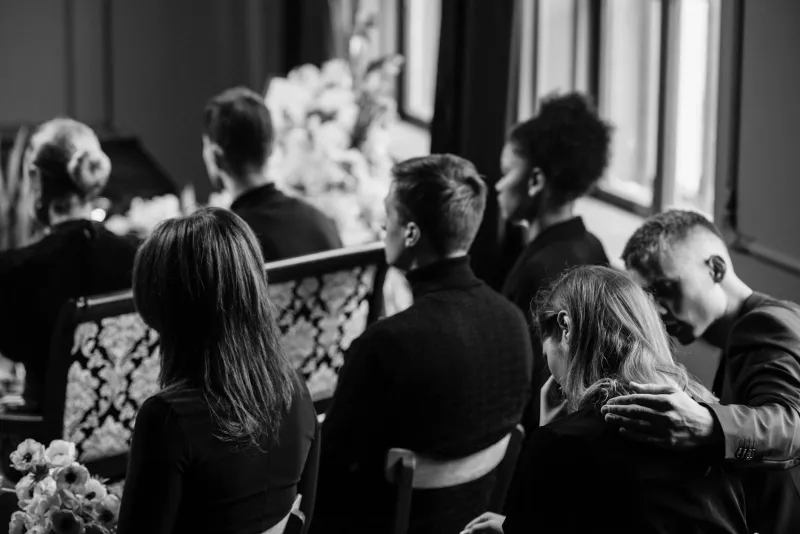
Your memorial service planning meeting lasts fifteen minutes. Your sister suggests "something small and tasteful," which turns out to be funeral home code for "we're not sure who's coming." The professional colleagues who respected your expertise aren't sure if they qualify as mourners. The mentees you invested in are busy with their own careers now. The neighbors you politely waved to for twenty years don't know you well enough to grieve.
The funeral director gently suggests that perhaps a memorial service "celebrating your professional achievements" might be more appropriate than a traditional funeral. Translation: when your life happened in conference rooms, that's where people remember you — not in pews.
The Obituary That Nobody Knows How to Write
Your sister stares at the blank obituary template, trying to fill in thirty years of your life in 200 words. She knows about your promotions, your awards, your corner office. She doesn't know about your daily routines, your favorite restaurants, your private jokes, or the small moments that made you human.
"She was a trailblazer in her industry," she writes, because that's what LinkedIn would say. "She mentored countless young professionals," because that's what your performance reviews mentioned. "She will be remembered for her dedication to excellence," because what else is there to say about someone whose most intimate relationships were professional?
Meanwhile, Mrs. Patterson's obituary runs 800 words and includes the names of twelve grandchildren, her famous apple pie recipe, her 40-year marriage, and the time she organized the neighborhood Christmas pageant. Her life was lived in public, witnessed by people who loved her for reasons that had nothing to do with her resume.
The Stories That Die With You
The real tragedy isn't that fewer people come to your funeral — it's that the stories they tell are all from the same chapter. Your professional achievements, your industry impact, your mentorship style. Important stories, but incomplete ones.
Who remembers the way you laughed at terrible movies? Your secret obsession with true crime podcasts? The fact that you cried during every ASPCA commercial? Your cats know these things, but cats are notoriously poor eulogists.
The grandmother's funeral is rich with stories that span generations: how she met her husband, her terrible cooking in the early years, her fierce protection of her children, her delight in spoiling grandchildren. Her life was witnessed and remembered by people who knew her in every season, every mood, every version of herself.
Your stories are more like case studies. Professional anecdotes. Career highlights. The personal details that make someone irreplaceable? Those died with your last performance review.
The Estate That Solves Everything (Except Loneliness)
Your financial advisor is impressed. Your estate planning is meticulous, your assets substantial, your bequests thoughtful. You've left money to your alma mater, your favorite charities, even a trust for your cats (because you're not completely naive about your situation).
But money can't write eulogies. Charitable donations can't fill church pews with people who miss your laugh. Even your carefully planned memorial scholarship can't replicate the organic grief that comes when someone's daily presence is suddenly, permanently absent from the lives of people who needed them.
The grandmother's estate might be smaller, but her wealth was measured in different currency: the daughter who inherited her recipe box, the grandson who got her engagement ring to propose with, the great-granddaughter who will always remember the songs she sang during bath time.
The Professional Mourners
Your memorial service is well-attended by industry standards. Former colleagues speak eloquently about your contributions to quarterly earnings. Your replacement gives a touching speech about your leadership style. The CEO mentions your role in the company's biggest acquisition.
It's a lovely tribute to your professional legacy. It's also the saddest thing your sister has ever witnessed — a room full of people who respected you deeply but loved you not at all. They came to honor your achievements, not to grieve your absence. They'll return to their offices talking about what a successful career you had, not about how much they'll miss you.
The contrast is stark when you consider that Mrs. Patterson's great-nephew took three days off work just to sit with her final weeks. Your assistant sends a beautiful flower arrangement and returns to work the next day.
The Legacy That Fits in a LinkedIn Post
Six months later, your industry newsletter runs a brief memorial article. "Pioneering Executive Remembered for Breaking Barriers." It's accurate, respectful, and utterly forgettable. Your professional legacy lives on in the women you mentored, the glass ceilings you cracked, the precedents you set.
But legacies aren't just about what you accomplished — they're about who carries your memory forward with love, not just respect. They're about the people who think of you during ordinary moments, not just at annual award ceremonies.
Mrs. Patterson's great-granddaughter will think of her every time she bakes cookies. Your mentees will think of you when they negotiate their next promotion. Both are forms of remembrance, but only one feels like love.
The Final Performance Review
In the end, your life gets the same treatment as your career: measured, evaluated, and summarized in bullet points. Successful by every metric that matters to the outside world. Empty by the standards that matter when the outside world stops watching.
Your cats, now living with your bemused sister, are the only ones who mourn your daily presence rather than your professional absence. They're the only ones who knew the version of you that existed between achievements, the woman who existed when no one was keeping score.
It's a perfect metaphor for the choice you made at thirty: optimize for applause, and you'll get a standing ovation. But when the curtain finally falls, applause doesn't keep anyone warm. Only love does that, and love requires an audience that shows up for the whole performance, not just the highlight reel.