The 3 A.M. Question Nobody Helps You Answer: Who Gets the Cats?
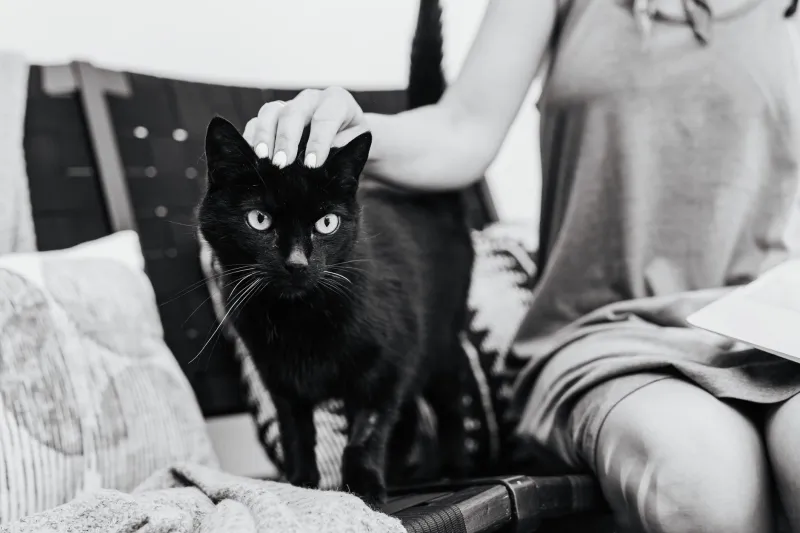
It starts the same way every time. You're fine. You've had a reasonable evening. Maybe some tea, maybe an episode of something, maybe a quiet conversation with Archimedes, who was listening in the way only cats listen — which is to say, entirely on his own terms. You turn off the light. You are a functional adult with a will, a Roth IRA, and a designated beneficiary on your 401(k).
And then, somewhere around 3 a.m., it arrives: But who gets the cats?
Not in a morbid way. Just in the way that all genuinely unsolved problems arrive when your brain finally has the quiet to surface them.
The Estate Plan That Covered Everything Except the Point
You did the responsible thing. You hired an attorney. You have a will. You have a healthcare proxy and a durable power of attorney and a clearly articulated preference for cremation over burial that is documented in triplicate. Your financial assets are distributed thoughtfully across three people who will be surprised and briefly grateful and then mildly inconvenienced by the paperwork.
And then there's the section your attorney sort of glossed over — the part about "personal property" — which technically includes your four cats but which nobody in the room seemed particularly eager to linger on.
Because here is the legal reality that no one tells you until you're already in the leather chair across from a man named Gerald who charges $400 an hour: in the eyes of American law, your cats are property. Beloved, irreplaceable, emotionally central property — but property nonetheless. You can leave money in a pet trust, which is legal in all 50 states now, technically. You can designate a caretaker. You can write very specific instructions.
What you cannot do is make anyone actually want the job.
The Conversation You've Never Had
Think about the people in your life. Your closest friends. The ones who've known you since before Archimedes, before Ptolemy, before the years when you started introducing yourself at parties by mentioning how many cats you have as a kind of social litmus test.
Have you asked any of them? Directly? "Hey, if something happens to me, will you take my cats?"
Probably not. Because the conversation is awkward in a specific way that's hard to articulate. It's not like asking someone to be a godparent — there's no ceremony for this, no social script, no moment where you stand at the front of a church and everyone nods solemnly and understands the weight of what's been asked. It's more like calling someone on a Wednesday afternoon to say, "I've been thinking about my mortality and also I need you to commit to a decade of wet food and litter box maintenance."
Your friends with kids don't have this problem. Not because they're more organized, but because the inheritance of care flows naturally through family structures they spent decades building. There are grandparents and aunts and adult children and whole networks of people who will show up, not because they were legally designated, but because they're there. Because someone built the village.
You have a village of one, and she's currently asleep on your heating pad.
The Workarounds That Sort of Work
The pet trust is real and you should absolutely have one. Fund it generously — more than you think is necessary, because vet costs will make you weep and whoever takes this on deserves to be compensated for the emotional labor of loving a grieving animal who doesn't understand what happened to you. Include detailed care instructions: dietary needs, behavioral quirks, the fact that Ptolemy requires his water bowl to be placed exactly fourteen inches from his food bowl or he will simply not drink and become dangerously dehydrated out of spite.
There are also pet sanctuaries and rescue organizations that offer retirement programs — you can arrange in advance for your cats to be transferred to a reputable facility if no individual caretaker steps up. This is a legitimate option. It is also, if you sit with it for more than thirty seconds, a little heartbreaking, which is why most people don't sit with it for more than thirty seconds and instead just don't make the arrangements and hope for the best.
The best is not a plan.
What the 3 A.M. Brain Is Actually Asking
Here's the thing about that 3 a.m. question. It's not really about the cats — or not only about the cats. It's about the absence of a natural succession. It's the recognition that you've built a life of genuine warmth and intentionality, and that the warmth lives primarily in one direction: from you outward, toward animals who depend on you completely, in a household where the dependency is not mutual in any logistical sense.
Women who have adult children don't lie awake wondering who will take the dog. The network self-assembles. The dog goes to the daughter who always loved him, or the son-in-law who never admitted it but secretly did, or the grandchild who's been asking for a pet for two years. The care continues because the people continue.
You are trying to engineer, with legal documents and spreadsheets and a very detailed care manual, something that other people got for free as a byproduct of the choices they made at 30.
Making Peace With the Unsolvable
None of this means you made the wrong choice. It means you made a choice, and choices have textures and consequences that don't always reveal themselves until 3 a.m. in February when it's very quiet and Archimedes is breathing softly on the pillow next to yours.
Make the trust. Have the awkward conversation with your most cat-tolerant friend. Find a rescue organization you believe in and make the arrangement official. Write the care manual with the specificity of someone who knows these animals better than anyone else on earth — because you do.
And then, maybe, extend yourself a little of the same grace you've spent fifteen years extending to animals who couldn't ask for it but needed it anyway.
The question doesn't fully resolve. But it gets a little quieter.
Archimedes, for his part, has already gone back to sleep. He is not worried. He has you.