The Volunteer Sign-Up Sheet That Built a Village (While You Were at a Networking Breakfast)

Photo: U.S. Army photo by Staff Sgt. Jose Rodriguez Guzman, Public domain, via Wikimedia Commons
In the fall of 2004, in a school gymnasium in Naperville, Illinois, a woman named Deborah signed up to chair the third-grade Halloween carnival committee. She did not want to chair the third-grade Halloween carnival committee. She had a job, a mortgage, and a deep personal skepticism about the organizational capacity of the other parents on the list.
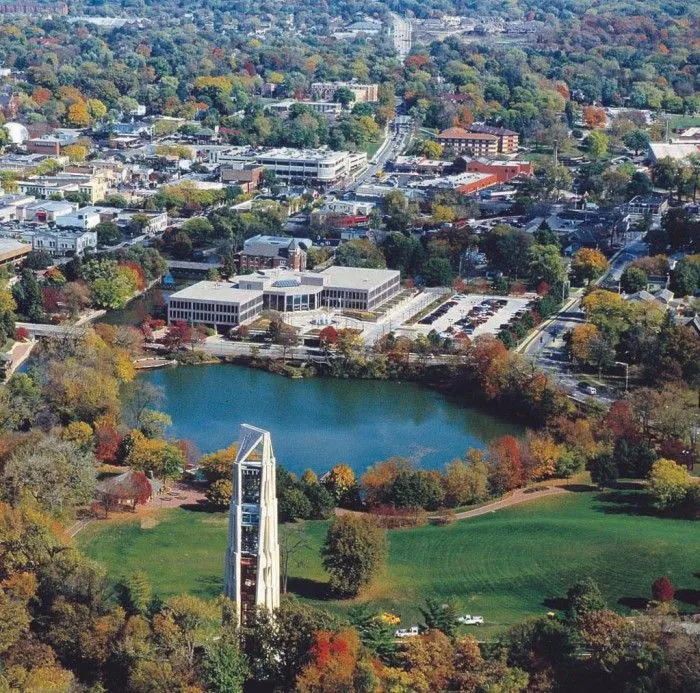 Photo: Naperville, Illinois, via i.pinimg.com
What Deborah got, over the next twelve years of school volunteering, was a social network so dense and resilient that it has now survived two divorces (not hers), one bankruptcy (also not hers), three cross-country moves, and a pandemic. She has people. Plural. The kind of people who show up with a casserole and a bottle of wine before you've finished explaining what's wrong.
She got all of this from a sign-up sheet in a gymnasium.
You were at a breakfast networking event that same morning. The eggs were fine. You collected eleven business cards. You are not in touch with any of those people.
The Infrastructure Hidden in the Carpool Lane
Here is a truth that professional development culture has never successfully monetized: the strongest social bonds in American adult life are not formed through shared ambition. They are formed through shared inconvenience.
And nothing generates shared inconvenience quite like being responsible, together, for other people's children.
The PTA, the school carnival committee, the classroom reading volunteer program, the graduation planning team — these are not, on their surface, particularly glamorous institutions. They involve a lot of laminating, a surprising amount of debate about whether the spring fundraiser should be a fun run or a silent auction, and at least one meeting per year that goes forty-five minutes over schedule because of a parking lot dispute that has been unresolved since 2011.
What they also involve is this: hundreds of hours of shared labor, shared stress, and shared small victories with the same group of people, repeated across years, in a context where everyone's guard is down because the stakes are simultaneously high (these are children) and charmingly low (it is a bake sale).
Friendships built in that crucible do not dissolve when the professional circumstances change. They do not require maintenance networking. They are not contingent on what you can do for someone's career. They are built on the bedrock of having stood next to each other in a school gymnasium at 7 p.m. on a Thursday, arguing about whether the dunk tank is worth the liability waiver.
That's the kind of friendship that still answers the phone at 62.
What the Professional Network Was Actually Selling You
The career literature of the 1990s and 2000s was very confident about where the important social investment was happening. Conferences. Industry associations. Mentorship programs. The strategic cultivation of professional relationships that could advance your trajectory and expand your influence.
This was not wrong, exactly. Those networks did what they said on the label. They built careers. They opened doors. They generated the kind of professional social capital that translated, for a while, into real opportunity.
Here is what the career literature left out of the prospectus: professional networks have a shelf life. They are organized around a shared context — the job, the industry, the mutual utility — and when that context changes, the network attenuates. People retire. Industries shift. The woman who was your most valuable contact at 42 is now living in Scottsdale and primarily interested in pickleball.
The school parking lot network does not have a shelf life. It is organized around people, not context, and it has been road-tested through every variety of human difficulty. The women who built it together in the third-grade classroom are still building it at 65, now through grandchildren, through illness, through the particular challenges of the third act. They have twenty years of shared history and the kind of trust that can only be earned through the great Halloween carnival controversies of 2004.
You have a LinkedIn network of 847 connections and a contact management system you keep meaning to update.
The Community That Set Without You
Concrete sets. You can work with it while it's wet, shape it, adjust it, incorporate new elements. Once it hardens, the structure is fixed. You can add things on top, but the foundation is done.
The school volunteer community set somewhere around 2015, give or take, for the generation of women who are now in their early sixties. The bonds were formed. The trust was established. The informal network of mutual support was wired and operational. New members are welcomed warmly, but there is a texture to twenty-year friendships that cannot be replicated by joining the book club at 61 and being very charming about it.
This is not anyone's fault. It is just the nature of social infrastructure. It gets built during the building years, and the building years are finite.
For women who spent those years in conference rooms and on business travel and at the kind of professional events where you stand with a drink and try to make your ambitions sound casual, the school parking lot was always somewhere else. It was not a place you were excluded from. It was a place that required a specific kind of ticket — a child's enrollment — and you didn't have the ticket.
The community that formed there did not wait. It couldn't. The children needed the carnival to happen.
What 62 Looks Like Without the PTA
At 62, the women who chaired those carnival committees are not, for the most part, still chairing carnival committees. But they are still talking to each other every week. They are in the group chat. They are the first call when something goes wrong. They are the people who know your history — not your professional history, but your actual history, the one that includes the difficult years and the embarrassing moments and the version of you that existed before you figured out how to present yourself.
That kind of witness is not available on LinkedIn. It cannot be acquired at a networking breakfast. It is built through years of shared presence in the ordinary, inconvenient, deeply unglamorous work of being part of a community.
The business cards you collected in 2004 are in a drawer somewhere, probably. Or they've been digitized into a contacts app you haven't opened since 2017. The women who signed up for the Halloween carnival committee that same year are going to Deborah's daughter's wedding next spring, and they've already started a group chat about what to wear.
The networking breakfast had better eggs, probably.
But the sign-up sheet built a village.
And at 62, the village is the whole thing.