Whiskers Has a Longitudinal Health Study. You Have a Shoebox of EOBs.
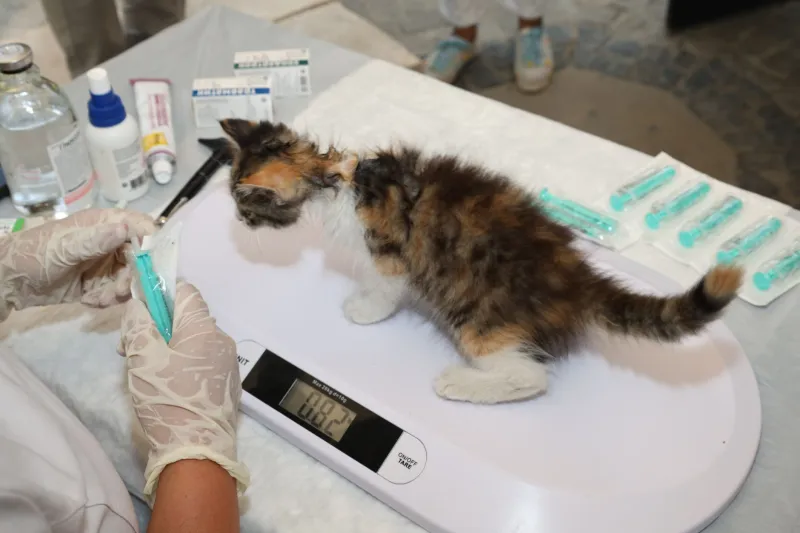
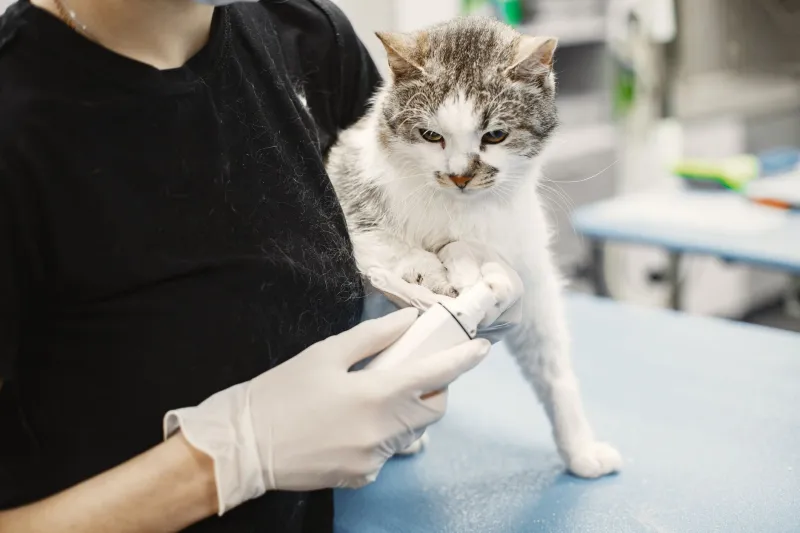
Let's play a game. Call your vet's office right now and ask them what Biscuit weighed on March 14th, 2017, whether his dental cleaning that year turned up anything concerning, and what brand of urinary-support kibble you switched him to after his second UTI.
They will tell you. Immediately. Possibly while simultaneously scheduling your reminder for his senior bloodwork panel.
Now call your doctor's office and ask what your cholesterol numbers were in 2017.
We'll wait.
The Most Coherent Story of Your Life Is Filed Under "Feline"
Somewhere in a climate-controlled veterinary records system — probably cloud-synced, probably color-coded by species — is the most accurate longitudinal portrait of your adult life in existence. Not your LinkedIn profile. Not your diary. Not your mother's Christmas letter updates, which she stopped writing in 2011 when she ran out of grandchildren news to share and couldn't very well lead with your promotion again.
Your vet has the receipts.
They know that in 2009, you adopted Mochi at age 28, fresh off a breakup and a lease you signed alone for the first time. They know that by 2012, you'd added a second cat — Ptolemy — which coincided, not coincidentally, with the period your friends started disappearing into minivans and mortgage paperwork. They know that in 2015, you switched from the discount food to the grain-free premium line, which tracks almost perfectly with your first significant salary bump and the moment you started describing yourself as someone who "invests in quality."
They know about the weight gain (Ptolemy's, but honestly, yours too — it was a rough 2018). They know about the anxiety medication you tried for Mochi after the move to the new apartment, and if you're being honest with yourself, that move was also the year you started seeing a therapist for the first time and realized you and your cat were essentially being treated for the same condition by professionals in adjacent strip mall suites.
This is your biography. It lives at the front desk of an animal hospital in a suburb of wherever you thought you'd only live temporarily.
Meanwhile, Back in Human Healthcare
Your own medical records, by contrast, are a work of magnificent chaos. There's the GP you saw from 2008 to 2014 who retired and whose practice sold to a hospital system that eventually got absorbed by a larger hospital system whose patient portal requires a password you reset so many times it now exists only in the spiritual realm. There's the specialist you saw once in 2016 who sent a report to a doctor you'd already stopped seeing. There are four different insurance companies across three states, each holding fragments of you like a broken plate nobody bothered to reassemble.
You have been, medically speaking, a series of disconnected episodes rather than a coherent narrative.
Your cat, however, is a story.
What the Vet Knows That Nobody Else Does
Here's the part that should make you sit with your feelings for a minute: the vet's office doesn't just track medical data. It tracks you. Behavioral changes in pets are almost always documented with environmental context. "Owner reports increased hiding behavior following household change." "Patient presenting with stress-related overgrooming; owner recently changed work schedule." "Appetite changes noted; owner traveling more frequently for work."
Your vet has been quietly annotating your life choices in the margins of your cat's chart for fifteen years. The job change. The relationship that ended. The period you moved three times in four years because you had the freedom to do that, and freedom is supposed to feel like something, right?
They're not judging you. They're genuinely just tracking the patient. But the patient's wellness is inextricably linked to your wellness, which means someone, somewhere, has been paying close attention to the arc of your life — even if that someone is a vet tech named Caitlin who also tracks your preferred appointment times and knows you always cry a little at the annual exam even when nothing is wrong.
The Senior Pet and the Senior Owner: A Parallel Journey
Here's where it gets genuinely poignant, and we say that with all the warmth and only a small amount of our trademark editorial smirk: as your cats age into their senior years, so do you. And the vet's office is ready for this. They have protocols. Senior wellness panels. Quality-of-life assessments. End-of-life planning conversations, delivered with compassion and a box of tissues on the counter.
Your doctor's office has a waiting room with a television permanently tuned to a channel nobody chose and a clipboard asking whether you've had any surgeries since your last visit, which was fourteen months ago, which was already too long, which you knew even then.
The contrast is not subtle.
What This Actually Means at 60
If you are approaching sixty with more cats than you have people who know your medical history, this is not a crisis — it's a data point. It means that the institutional care you extended to the animals in your life was meticulous, loving, and consistent. It means you showed up. Every year. With the records. You remembered the medications and the dietary notes and the behavioral quirks that required documentation.
You just maybe forgot to apply that same careful attention to your own file.
The good news is that it's not too late to become the protagonist of your own medical chart. The slightly uncomfortable news is that your vet already knows more about who you are at sixty than most people in your life do — and they learned it all by paying attention to a twelve-pound tabby who cannot speak but has, it turns out, been telling your story all along.
Biscuit, for his part, remains unavailable for comment. He has an appointment at 2:15.