The Family 911 System Nobody Issued You a Badge For: How Grandmothers Became America's Most Reliable Emergency Service
The Family 911 System Nobody Issued You a Badge For: How Grandmothers Became America's Most Reliable Emergency Service
Somewhere in suburban Ohio right now, a grandmother named Linda is already backing out of her driveway. Her daughter called six minutes ago. The toddler has an ear infection, the pediatrician can only fit them in at 11, and her son-in-law has a conference call he can't move. Linda didn't check her calendar. She didn't negotiate a reschedule. She just went.
This is not a heartwarming anecdote. This is infrastructure.
And if you spent your thirties building a career instead of a family, you are not on the infrastructure. You are not even in the directory.
The Group Chat You Didn't Know Existed
Here's what nobody tells you when the feminist career literature is selling you on the corner office: the most sophisticated mutual aid network in American life isn't run by a nonprofit, a government agency, or a tech startup with Series B funding. It's run by grandmothers. It operates on text threads, casseroles, and the kind of unconditional availability that no HR policy has ever successfully replicated.
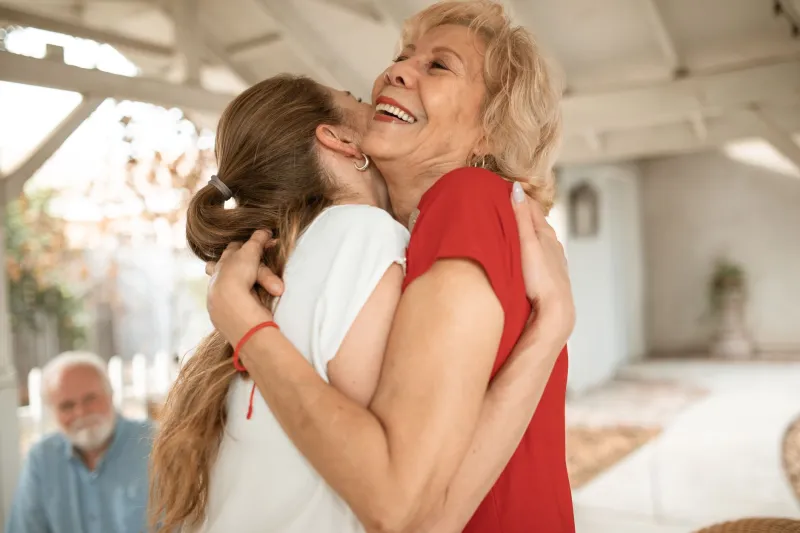
When a young couple's marriage hits its first real wall, it's usually a grandmother — or two — quietly absorbing the shockwaves. She's taking the kids for the weekend so her daughter can breathe. She's on the phone at midnight talking her son off a ledge. She's the one who shows up with groceries and doesn't ask too many questions. She is the crisis counselor, the logistics coordinator, and the emotional processing unit, all in one person who also somehow remembers to water your plants.
The social capital being generated in these moments is staggering. And it compounds. Every crisis absorbed, every school pickup covered, every sick-day shift pulled — these are deposits into a relational account that pays dividends for decades. The women making these deposits aren't thinking of it as strategy. But at 65, they are surrounded by people who would move mountains for them, because they already did.
What the Career Brochure Called 'Freedom'
At 35, opting out of the family infrastructure felt like freedom. And honestly? In a lot of ways, it was. No one was calling you at 6 a.m. because the babysitter canceled. No one needed you to rearrange your entire Tuesday because of a school play rehearsal. Your calendar was your own. Your weekends were sovereign territory.
The thing about freedom, though, is that it's a two-way door. The same choices that kept you out of the obligation column also kept you out of the need column. Nobody calls you at 2 a.m. because nobody has established the pattern of calling you at 2 a.m. The infrastructure doesn't include you because you were never part of the build.
That's not a moral failing. It's just math.
But at 62, the math starts to look different. Because the women who spent their thirties being inconvenienced by family emergencies are now the women who have a standing army of people who feel genuinely, deeply indebted to them. And you have a very clean kitchen and a cat named Professor Mittens who is an excellent listener but cannot drive.
 Photo: Professor Mittens, via thumbs.dreamstime.com
The Invisible Dispatch Center
Here's how the system actually works, for those of us who missed the orientation:
A family crisis — any crisis, from a broken arm to a broken marriage — triggers an immediate, automatic mobilization. The grandmother is the first call. Not because she's the most qualified, but because she has established, over years of showing up, that she is available. Her availability is not accidental. It was built, brick by brick, through thousands of small moments that looked like inconvenience at the time.
From that first call, the web expands. Other family members are looped in. Schedules are rearranged. Meals appear. Children are shuttled. And at the center of it all, coordinating with the quiet efficiency of someone who has done this many times before, is the grandmother.
She is not doing this for the social capital. She is doing this because she loves her family. But the social capital accrues anyway, the way interest accrues whether you're watching it or not.
What 62 Feels Like From the Outside
If you are a childless woman in your early sixties, you have probably watched this system operate from a comfortable distance for years. Maybe you've admired it. Maybe you've found it a little suffocating, honestly. All those obligations, all that chaos, all those other people's emergencies landing in your lap.
And then somewhere around your late fifties, the distance started to feel less comfortable and more just... far. You are not in the chaos, but you are also not in the web. When your own version of a 2 a.m. crisis arrives — and it will, because life is not actually optional — the dispatch center doesn't have your address on file.
Your emergency contact is a friend in another time zone. Your backup plan is a neighbor who is lovely but doesn't really know you. Your version of Linda backing out of the driveway is a rideshare app and a hope that someone picks up.
This is not a tragedy. People navigate it every day. But it is worth naming honestly, which is something the career brochure never quite got around to.
The Cats Are Not the Problem
Let's be clear: the cats are wonderful. The cats are warm and present and they do not cancel plans or forget your birthday. Mr. Whiskers has seen you through some genuinely difficult moments and deserves full credit.
But Mr. Whiskers cannot back out of a driveway. He cannot sit with a frightened teenager. He cannot hold a young couple's marriage together with a casserole and thirty years of hard-won wisdom about what it means to stay.
The family emergency network that grandmothers built didn't happen by accident. It happened because someone, decades ago, made a series of choices that prioritized presence over personal freedom. Those choices looked like sacrifice at the time. At 65, they look like the most sophisticated long-term investment a person can make.
The women who made different choices built impressive things. Careers. Portfolios. Beautifully renovated homes. And one very devoted group of cats who are, in fairness, doing their best.
The group chat just isn't their department.