The Silent Reading Room Revolution: How Your Local Library Became a Members-Only Grandparents Club
The Democracy Myth
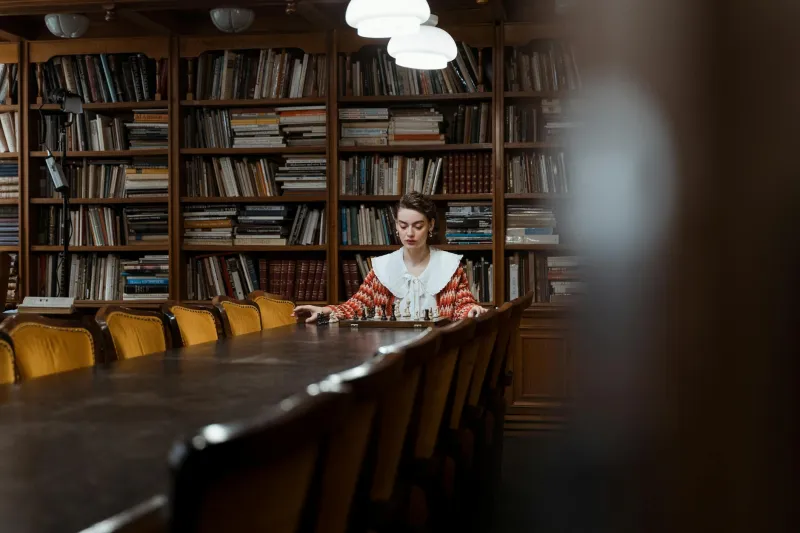
Walk into any public library on a Thursday afternoon, and you'll witness American democracy in action. Or so the brochures claim. Between the mahogany reading tables and the carefully curated displays of staff picks, something else is happening — a quiet reorganization of intellectual community around one specific life experience.
The Millfield Public Library's winter programming schedule reads like a family reunion itinerary. "Grandparents and Me Storytime" anchors Tuesday mornings. "Intergenerational Book Club" owns Thursday evenings. "Crafting Memories with Little Ones" dominates Saturday afternoons. Even the generic-sounding "Adult Literary Discussion Group" comes with a winking assumption: surely everyone over 55 has stories about reading Charlotte's Web to someone small.
 Photo: Millfield Public Library, via www.r5-etech-forum.de
The Invisible Membership Requirements
Librarian Susan Martinez didn't mean to create an exclusive club when she redesigned the programming three years ago. "We just followed the data," she explains, gesturing toward participation charts that show consistent attendance spikes whenever events include "multi-generational" in the description. "Families want programming that brings everyone together."
 Photo: Susan Martinez, via www.bobvila.com
But data tells only half the story. The other half sits in the corner chair every Thursday, listening to discussions that invariably veer toward potty training breakthroughs and soccer schedule negotiations. Margaret Chen, 64, former marketing executive, current regular attendee, describes the experience: "I love The Seven Husbands of Evelyn Hugo as much as anyone, but when the conversation shifts to how the protagonist's choices mirror modern parenting dilemmas, I become a spectator in my own book club."
 Photo: Margaret Chen, via www.geologypage.com
The architecture of inclusion masks the reality of exclusion. Everyone is welcome; not everyone belongs.
The Volunteer Hierarchy
Libraries run on volunteers, and volunteers organize themselves around shared experiences. The reading program coordinator position — the one that comes with actual influence over book selections and discussion topics — typically goes to retired teachers who "understand child development." Translation: grandmothers need apply.
"I offered to lead a discussion on contemporary fiction," recalls Patricia Williams, a 61-year-old former literary agent. "They suggested I might be more comfortable helping with the genealogy workshop instead." The genealogy workshop, naturally, focuses on preserving family stories for future generations.
The irony isn't lost on women who spent decades fighting workplace exclusion, only to encounter it again in retirement at the one institution that promised intellectual sanctuary.
The Great Pivot
Public libraries didn't always operate this way. Twenty years ago, adult programming meant author lectures, poetry readings, and book discussions that assumed participants were there for the books, not the bonding. The shift toward "community-centered" programming reflects changing demographics and funding pressures, but it also reflects assumptions about what kinds of community matter.
"When budget cuts hit, we had to prove our value to taxpayers," explains Martinez. "Family programming photographs well for annual reports. It shows impact across generations." What doesn't photograph well: the solitary reader who finds intellectual stimulation in literary analysis, not life lessons about parenting.
The Quiet Exodus
The women leaving library programming don't make dramatic exits. They simply stop coming. Margaret Chen now buys books instead of borrowing them. Patricia Williams joined a private book club that meets in members' homes — homes notably free of playground equipment and refrigerator art.
"I miss the library," Chen admits. "I miss feeling like reading was a communal activity, not a family activity." The distinction matters more than libraries seem to realize.
The Cost of Exclusion
When public institutions organize around family structures, they inadvertently create hierarchies of belonging. The woman who spent her career breaking barriers finds herself on the wrong side of a new one — not because of her achievements, but because of her choices.
Libraries pride themselves on serving everyone, but their programming calendars suggest some patrons matter more than others. The childless woman seeking intellectual community discovers that even in the most democratic of spaces, membership has its privileges.
Finding Alternative Chapters
The solution isn't eliminating family programming — it's acknowledging that intellectual community takes many forms. Libraries could offer book discussions that focus on books, not life applications. They could host author events that don't assume every attendee relates to characters through parenting experiences. They could remember that reading was a solitary pleasure long before it became a family activity.
Until then, the women who chose careers over children discover that even their local library has a preference for how the story should end.