Forty Acres and a Fool: The Hobby Farm Fantasy That Forgot to Mention the Labor Force
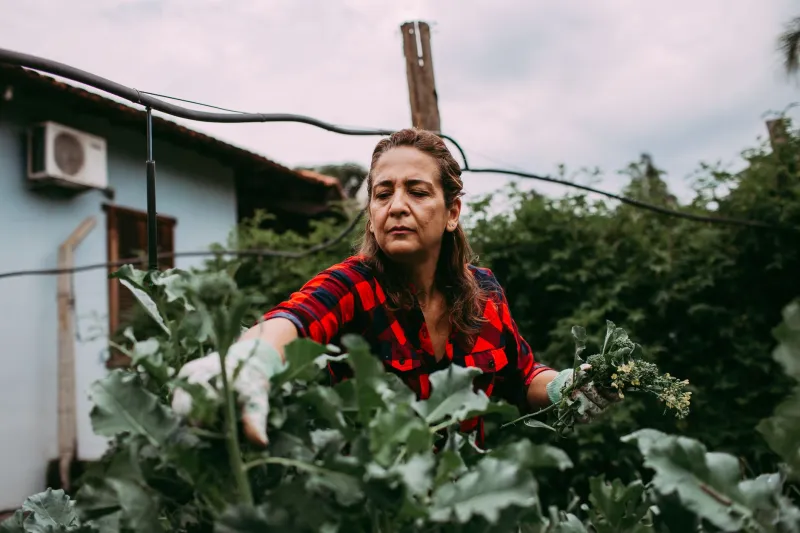
The photos were spectacular. Let's just acknowledge that upfront, because whoever styled those retirement lifestyle shoots deserves some kind of award for aspirational fiction. The weathered barn. The raised beds bursting with heirloom tomatoes. The cheerful chickens doing whatever it is cheerful chickens do in photographs, which appears to be posing. The woman in the wide-brimmed hat, coffee in hand, surveying her domain with the serene expression of someone who has finally, finally gotten it right.
What the photographer did not capture — and this is the detail that tends to emerge around month four of actual hobby farm ownership — was the extended family just off frame. The son-in-law who built those raised beds over a long weekend. The teenage grandchildren who collect the eggs every morning before school. The daughter who researched the chicken breeds, ordered the feed, and set up the automatic waterer during a visit last spring. The neighbor who plows the driveway in January because his kids grew up with your kids and that's just how things work out here.
The hobby farm dream is real. It's lovely. It's genuinely achievable. It just comes with a staffing requirement that the magazine forgot to list in the sidebar.
The Lifestyle Content Left Out the Cast List
Here is what happens when you type "hobby farm retirement" into any search engine: a cascade of beautiful, achievable-looking content about slower living, food sovereignty, fresh air, and the particular satisfaction of watching things grow. What does not appear, because it would be rude and also bad for engagement, is the demographic breakdown of the people actually sustaining those operations.
Spend any time in rural communities — actual rural communities, not the ones within forty minutes of a Whole Foods — and the pattern becomes obvious. The thriving small-scale farms and rural homesteads that inspire the lifestyle content are almost universally multigenerational operations. Grandparents provide the land and the vision. Adult children provide the labor and the logistics. Grandchildren provide the energy and, eventually, the succession plan.
This is not a modern arrangement. It is, in fact, the oldest arrangement in American agricultural history. The nuclear family farm was always a multigenerational enterprise. The lifestyle content simply repackaged it as a solo retirement project and forgot to mention the footnotes.
What Fifty Acres Actually Requires on a Tuesday
Let's get specific, because the gap between the Pinterest board and the Tuesday morning reality deserves some honest documentation.
Fifty acres — the size that appears most frequently in retirement hobby farm fantasies — requires, at minimum, regular mowing of common areas and access roads, fence maintenance across a perimeter that is longer than it looks on the listing, monitoring and managing drainage issues that emerge seasonally and without warning, firewood procurement and stacking if the property includes the charming wood-burning stove that appeared in the listing photos, and the general infrastructure maintenance of a rural property that is, by definition, far from anyone who can be called on short notice.
Add a garden of any meaningful size and you've added soil amendment, pest management, irrigation monitoring, harvest logistics, and the particular joy of discovering that something has eaten your entire row of kale overnight and you cannot identify the culprit.
Add chickens — and everyone adds chickens, because the chickens are in every photo — and you've added daily feeding and watering, coop cleaning, predator management, egg collection, and the occasional veterinary situation that is somehow both expensive and embarrassing to explain.
None of this is impossible for a single person in good health. It is, however, a full-time physical job that does not pause for illness, bad weather, travel, or the general wear of being sixty-one years old with a knee that has opinions about cold mornings.
The Women Who Arrived at the Dream
Across the country, in the years since pandemic-era real estate opened up rural properties to a wave of urban and suburban buyers, a particular demographic has made the hobby farm leap: professional women in their late fifties, recently retired or semi-retired, financially positioned to purchase rural acreage, and genuinely motivated by the vision of a more intentional life.
The first season tends to go well. Enthusiasm is a remarkable labor substitute. The garden gets planted. The chickens arrive. The Instagram account, if there is one, documents everything with the golden-hour filter that the retirement magazines taught everyone to apply.
The second season is when the staffing problem becomes visible. The fence that needs repairing requires either a contractor with a three-week wait or a person who knows how to repair fences, and those people tend to be embedded in networks built over decades of rural community participation. The garden that needs expanding requires either hiring labor — which in rural areas is both expensive and relationship-dependent — or having the kind of family network that shows up for a weekend work party because that's what families do.
The third season is when the honest conversations begin. About scale. About sustainability. About the gap between the vision and the reality of executing it without the invisible labor force that every successful version of this life seems to include.
The Favor Economy Is Geographically Concentrated in Rural Areas
Urban and suburban favor networks are real but diffuse. Rural favor networks are dense, specific, and almost entirely dependent on long-term community embeddedness.
The neighbor who plows your driveway does so because of a relationship built over years. The farmer down the road who lets you know when the well pressure looks wrong does so because your family and his family have a history. The guy who fixes the tractor — yes, eventually there is a tractor situation — does so because he knows you and trusts you and you've shown up for him in some form over the years.
For women arriving at rural properties without that history, without the family connections that typically anchor rural community relationships, and without the children and grandchildren who would naturally accelerate community integration, the favor economy is not immediately accessible. It can be built. It takes time. It takes the kind of consistent, patient community participation that is harder to sustain when you're also managing fifty acres largely alone.
The cats, incidentally, are useless for fence repair. Aggressively, pointedly useless. They will watch you struggle with a fence post with the detached interest of very small livestock consultants and contribute nothing actionable.
The Dream Is Still Worth Having. Probably. Read the Fine Print.
None of this is to say the hobby farm retirement is a mistake. It's a beautiful vision, and for women with the right combination of physical capacity, community connections, financial cushion for hired help, and realistic expectations about scale, it's genuinely achievable.
But the lifestyle content owes its audience a more honest sidebar. Something like: results shown with full family participation. Individual outcomes may vary. Grandchildren not included. Fence repair labor sold separately.
The chickens, at least, will be happy to see you every morning. They're not grandchildren. But they have their own chaotic energy, they require your attention, they make noise at inconvenient hours, and they are completely indifferent to your professional accomplishments.
In that sense, they're not entirely unlike cats.
Welcome to the farm. The fence needs looking at.